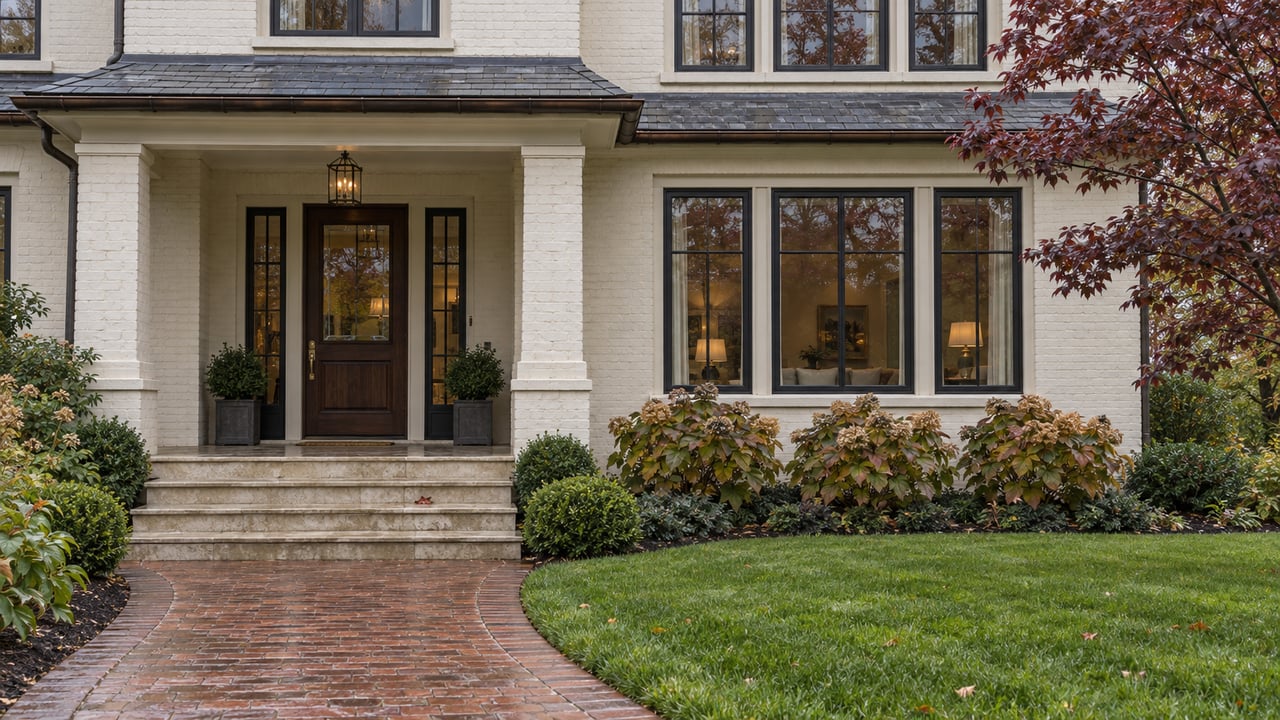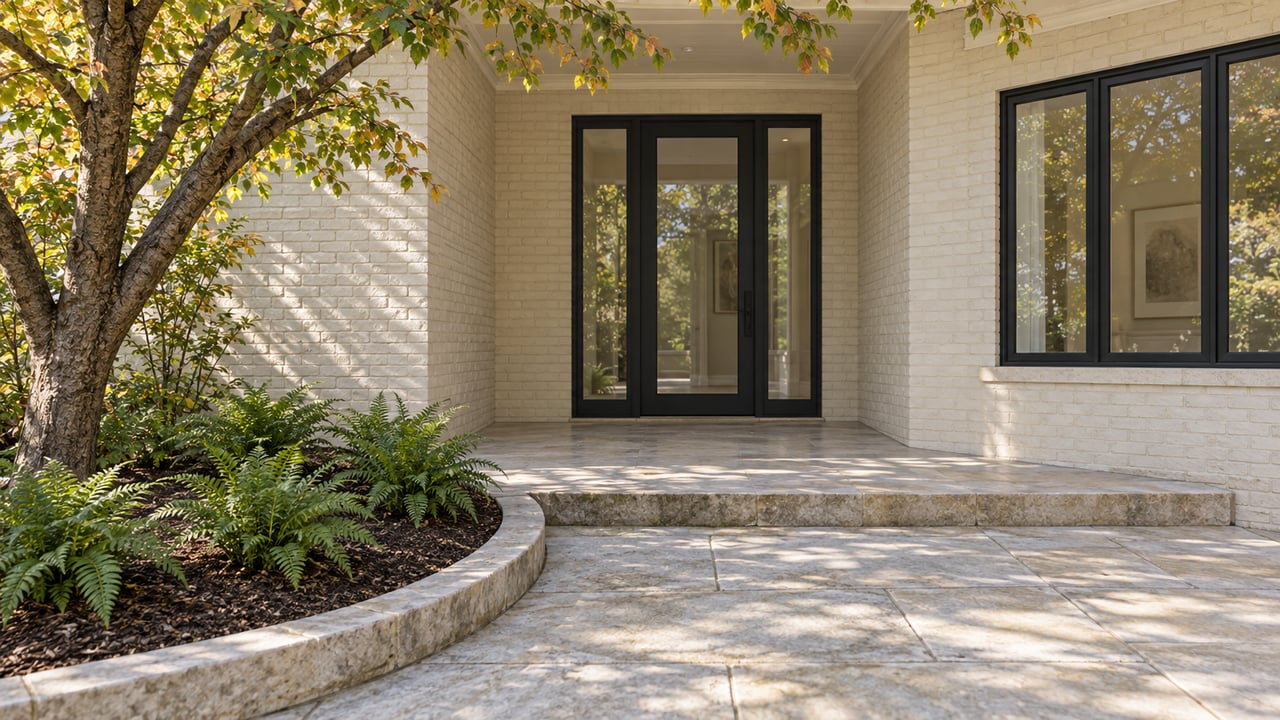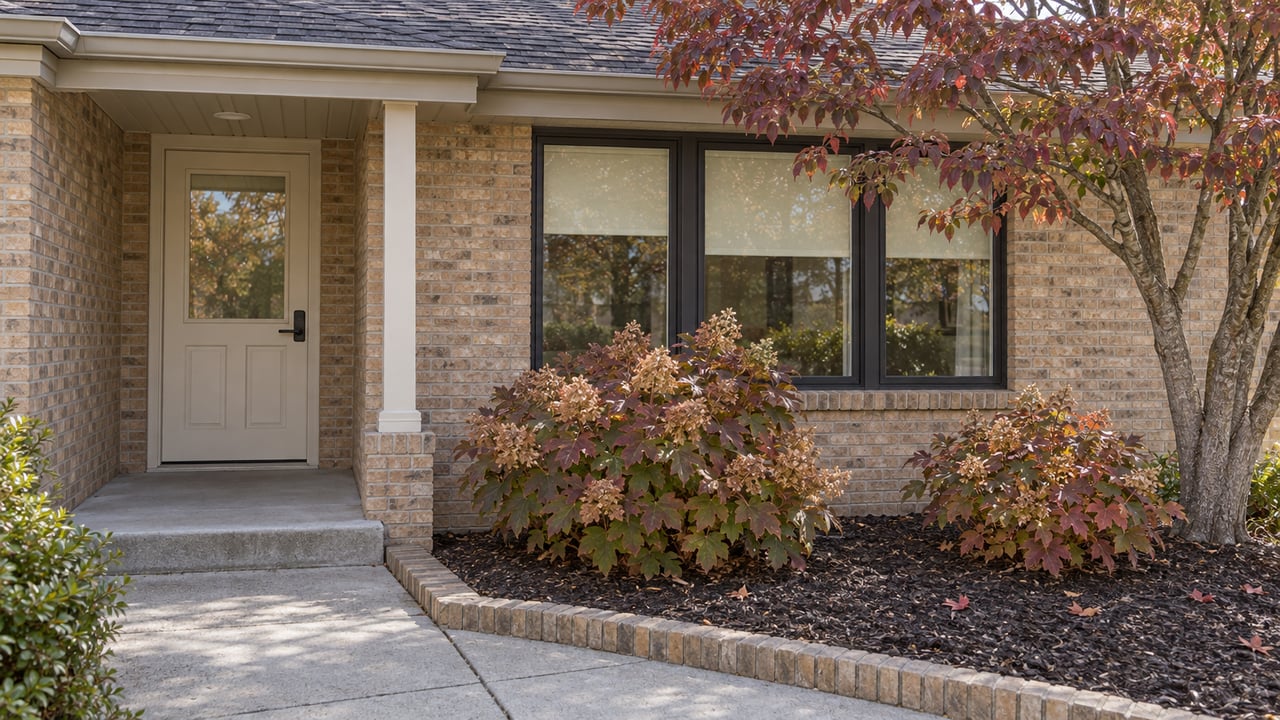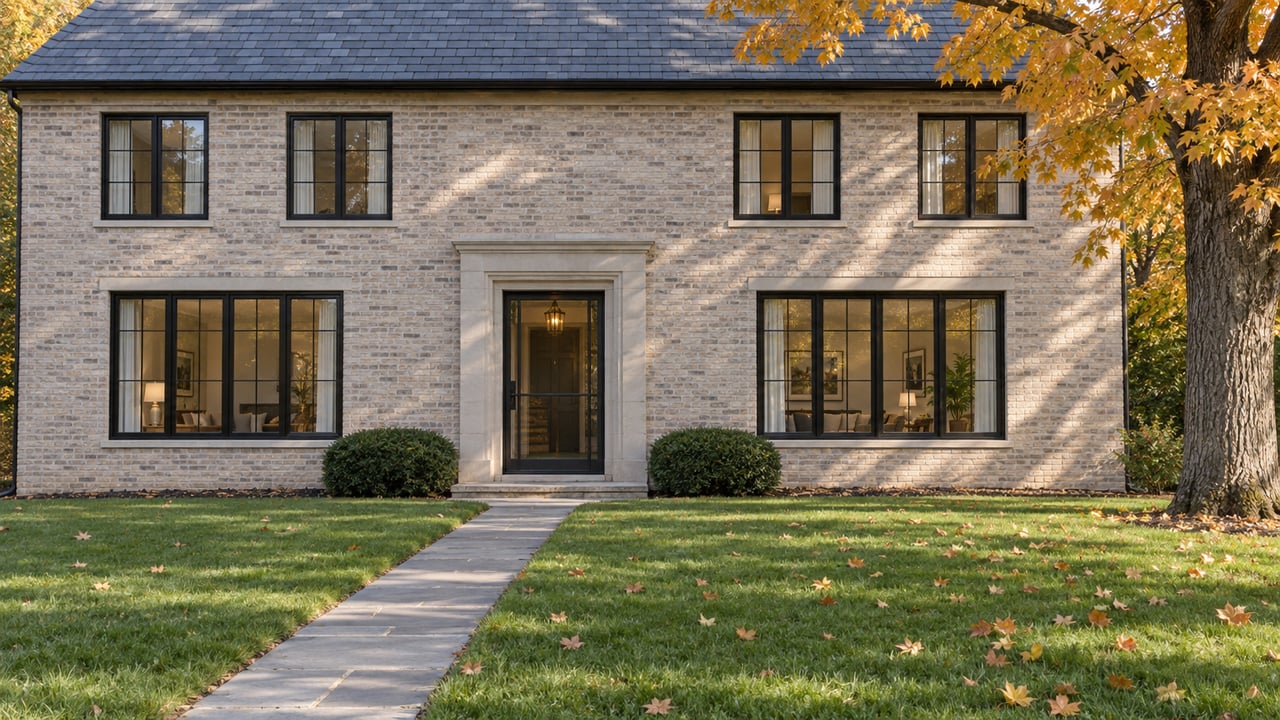
One listing in Kenwood Park reads like this: a 9,027 square foot lot, priced at $1,255,000, with a condition attached. The buyer must settle on the lot at that price and build with The Kehoe Group. There is no house being sold. There is no square footage, no bedroom count, no photograph of a kitchen. The price buys dirt and a builder assignment.
A few streets over, a newly built Tudor estate at 6416 Garnett Drive sits on a 9,782 square foot lot, backing to rolling golf course views. Same builder, Kevin Kehoe of The Kehoe Group, working with architect Claude C. Lapp and interior designer Megan Lynn Interiors. This one comes finished: 8,500 square feet, seven bedrooms, each with its own en suite bathroom.
Two lots, nearly identical in size, from the same building team. One is priced as land. The other is priced as a finished product with a premium attached for design, materials, and the fact that you can move in immediately. If you pulled up both listings on a portal and looked only at price per square foot of lot, you would learn nothing useful about why one costs a fraction of the other.
That is the mechanic worth understanding before you treat any Kenwood number as a single market.
The average is blending two different products
As of February 2026, the median home price in Kenwood Park sat at $1,580,000, down 9 percent from the median twelve months earlier. That figure includes everything that changed hands: original-condition colonials from the neighborhood's 1930s and 1940s development era, expanded and updated homes, and brand-new custom builds.
A separate read on the neighborhood's luxury segment, published in April 2026, puts the typical luxury home in Kenwood between $1.8 million and $3.5 million, with the top of the market approaching $4 million for the largest, most extensively renovated properties.
Those two numbers are not contradicting each other. They are describing different halves of the same 300 or so homes that make up Kenwood. The median absorbs the fixer-uppers and the fully custom estates into one blended figure. The luxury range describes only the finished-product end of that same neighborhood. A buyer who anchors on $1.58 million as "the Kenwood price" and then finds themselves competing for a home in the $2.5 million range has not stumbled into an overpriced outlier. They have found the other half of the market that the median was always quietly including.
What the same lot size actually buys
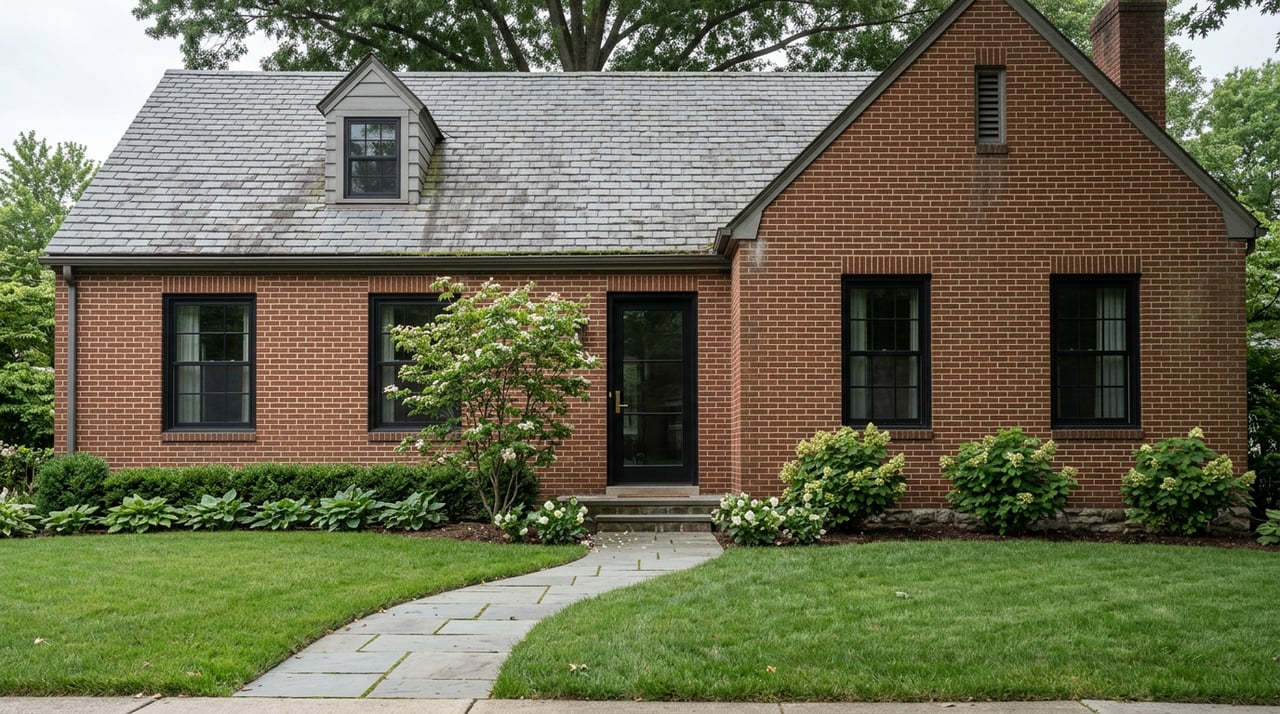
Kenwood's original subdivision plan favored generous parcels, most in the quarter-acre range and up, which is part of why the neighborhood still reads as spacious despite sitting close to downtown Bethesda. But lot size alone tells you almost nothing about what you are paying for, because the structures on those lots split into three rough tiers.
| Product type | Typical condition | What you're pricing |
|---|---|---|
| Original stock, unrenovated | 1930s-1950s colonial or Tudor, "TLC required" | Land value plus renovation risk |
| Expanded or updated original | Same-era home, meaningfully renovated | Land value plus partial premium |
| New or gut-rebuilt custom | Recent construction, named local builder | Land value plus full finish premium |
A Tudor at the corner of Kennedy Drive and Dorset Avenue, listed as "TLC required," sits on one of the neighborhood's best-known cherry blossom corridors and is priced accordingly low for the segment. Compare that to a home built in 1941, held by the same family for more than fifty years, expanded and maintained on a lot just under half an acre. It is not new construction, but decades of upkeep and expansion have already absorbed much of the renovation risk a buyer would otherwise have to price in. Then compare both to 7105 Marbury Road, a brand-new custom build from ERB Properties with more than 7,000 square feet across three levels, or the quarter-acre corner lot where Red & Friends LLC and Duren Projects delivered a new 6,500 square foot home with five bedrooms and an optional sixth.
Three lots. Three very different numbers. Same neighborhood, same school cluster, same cherry trees down the block in April.
Why this distorts the numbers you're reading
Days-on-market and price-per-square-foot figures get reported as single averages, but they are averaging across products that behave nothing alike. A custom build from a known local team, priced right, can generate immediate interest because the buyer pool for finished luxury product in Bethesda is deep and impatient. An original-condition colonial with deferred maintenance moves at a different pace entirely, because its buyer pool is builders and renovators calculating construction costs before they calculate an offer.
Kenwood Park's overall average, homes selling in 39 days as of February 2026, is a blend of both behaviors. It does not tell you whether the specific listing you're evaluating is the fast-moving kind or the slow-moving kind. Only the condition of the house does that.
This matters most when you're using a recent sale as a comp. If the comp that sold two blocks away was a finished custom home and the property you're evaluating is original stock, the dollar-per-square-foot math from that comp will overstate what the second property is actually worth as-is. The reverse is just as common: an agent or a seller anchoring a fixer-upper's asking price to a nearby new-construction sale, when the real ceiling on that price is what a builder is willing to pay for the lot, not what a finished home nearby fetched.
Before you treat two Kenwood listings as comparable
- Confirm the year the structure was built or last substantially renovated, not just the lot size
- Ask whether the sale includes a builder assignment or construction covenant, as some teardown-lot listings do
- Separate the land value from the structure value before comparing price per square foot across two listings
- Check whether the comp you're using closed as a finished home or as raw land with a house still standing on it
None of this shows up cleanly on a portal search. It shows up when someone who tracks this neighborhood pulls the actual sale terms.
FAQ
Does a bigger lot always mean a higher price in Kenwood? Not on its own. Lot size sets a ceiling on what could eventually be built, but the price of an individual listing depends far more on the condition of the existing structure and whether a builder assignment is attached to the sale.
Why do some Kenwood listings require the buyer to use a specific builder? Several of the neighborhood's teardown lots are marketed by builders who have already secured the land and are selling the lot on the condition that they also handle construction. It is a common structure in Bethesda's close-in neighborhoods where custom builders control a pipeline of parcels.
Is Kenwood being torn down and rebuilt house by house? No. New construction is active on individual lots as they turn over, alongside long-held original homes and updated colonials. All three categories currently coexist on the same streets, which is exactly why a single median price undersells how different the actual inventory is.
If you are trying to figure out which side of Kenwood's market a specific listing sits on, or what a lot is actually worth once you separate land from structure, that is the kind of read that comes from tracking closings here directly rather than from a portal average. Haleh Troy works this market and these comps daily. Let's Connect.